


WMS for Fashion: how to digitalize warehouse logistics and support growth, traceability, and the e-commerce channel
WMS for Fashion
How to digitalize warehouse logistics and support growth, traceability, and the e-commerce channel
How to digitalize warehouse logistics and support growth, traceability, and the e-commerce channel
An Italian software house, specializing in supply chain solutions for the fashion and luxury sectors, developed a vertical solution for warehouse logistics management, capable of supporting international brands in the digitalization of their logistics, production, and distribution processes. The project aimed to: address the typical complexities of fashion (color/size variants, seasonality, multi-channel), integrate RFID technologies, scales, automated warehouses, and vertical systems, and enhance support for e-commerce and retail in an international context.
🎯
Objectives
• Optimize logistics management of raw materials and finished products
• Increase traceability of garments and materials, including Made In, CITES, and dye batches
• Automate processes for receiving, picking, packing, and shipping
• Support the e-commerce channel and omnichannel logistics with a multi-site architecture
APPLICATION AREAS
• Fashion & Luxury
• Lingerie, accessories, footwear, fabrics
• Brands operating across retail, wholesale, and e-commerce channels
⚙️
Implemented Solution – Logimoda WMS
Raw Material Management
• Traceability of fabric and leather serial numbers
• Quality control and management of packages/serial numbers
• Traceability of orders, colors, and certifications
Finished Product Management
• Mass picking and Put to Light
• Cross-docking and pre-packing
• RFID integration for receiving, handling, and shipping
Warehouse and E-commerce
• Multi-company, multi-client, and multi-site
• Centralized architecture, management of folded and hanging garments
• Logistics optimization for fashion peaks and seasonality
• E-commerce support with fast and accurate order preparation
Additional Features
• Real-time monitoring
• Integrated scales and sorter systems
• Automatic generation of tasks, labels, and packing lists
• Management of trucks and digitalized delivery note flows
📊
Results
• Migliorata la visibilità sull’inventario e tracciabilità completa per materie prime e prodotti
ChatGPT ha detto:
• Improved inventory visibility and full traceability for raw materials and finished products
• Reduced order fulfillment times and optimized picking and packing activities
• Warehouse ready to handle seasonal peaks and e-commerce events
• High-quality standards for garment preparation, aligned with luxury positionin
• Ridotti i tempi di evasione ordini e ottimizzate le attività di picking e imballo
• Magazzino pronto a gestire picchi stagionali ed eventi e-commerce
• Standard qualitativi elevati per la preparazione capi, in linea con il posizionamento luxury
🧠
Value
ChatGPT ha detto:
• Support for a dynamic and distributed supply chain in a highly complex sector
• Seamless integration with industry ERP systems and worldwide shipping platforms
• Strong competitive advantage in terms of time, costs, and customer satisfaction
Do you operate in fashion and want to digitalize your logistics or support your e-commerce channel?
Discover our go-to-market and B2B lead generation service for vertical software in the fashion sector.

B2B Lead Generation for RFID and Machine Vision Solutions: Over 22,000 companies profiled and active contacts in strategic industrial sectors
B2B Lead Generation for RFID and Machine Vision Solutions
Over 22,000 companies profiled and active contacts in strategic industrial sectors
Over 22,000 companies profiled and active contacts in strategic industrial sectors
A company specialized in supplying industrial traceability solutions (RFID, fixed scanners, machine vision, MES) commissioned Geocom One to generate new qualified contacts in the Italian manufacturing sector. The campaign targeted 22,787 companies with a well-defined audience of Logistics, Production, Supply Chain, IT, and Purchasing managers in sectors such as food, mechanical, pharmaceutical, electronics, and packaging.
🎯
Project Goals
• Promote a proprietary MES platform, RFID devices and industrial readers
• Generate appointments with decision makers
• Obtain detailed market interest metrics
• Strengthen online presence on LinkedIn and improve engagement rate
Promoted technologies:
• RFID solutions for tracking and inventory
• Fixed industrial scanners and vision systems
• MES software for production digitization
• Real-time internal logistics management platforms
⚙️
Strategy Implemented
1. Data intelligence and profiling
→ Segmentation by sector, role, turnover, geographic area
2. Personalized multichannel DEMs
→ Vertical newsletters with advanced click and open tracking
3. LinkedIn Social Selling campaign
→ Personalized connections, one-to-one messages and dedicated organic articles
4. Telephonic contact management and qualification
→ 500 companies contacted directly to schedule appointments and follow-ups
5. Lead nurturing
→ Response management, scheduled recalls, technical material sending
📊
Results Achieved
• 22,787 emails sent – open rate up to 46%
• Leads generated with company, role, sector and qualified comments
• 500 companies managed by phone → 16 video call appointments scheduled
• National lead mapping → mainly in Lombardy, Emilia-Romagna, Veneto
• Over 5,500 unique clicks on landing pages and product material
🧠
Value Generated for the Client
• Access to a profiled database with useful contacts also for future actions
• New commercial opportunities in key sectors of Italian industry
• Strong brand positioning in a competitive context
• Clear insights to optimize commercial and digital strategies
Do you need to generate qualified leads for complex solutions such as RFID, MES or industrial automation?
Let's talk: we create a tailor-made strategy for your sector
Commercial expansion in Spain: how we identified technology partners for WMS and SCM solutions
Commercial Expansion in Spain
How we identified technology partners for WMS and SCM solutions
How we identified technology partners for WMS and SCM solutions
An Italian supplier of warehouse management (WMS) and supply chain (SCM) software solutions entrusted Geocom One with a strategic commercial scouting project to identify qualified technology partners in Spain. The objective was twofold: activate new partnerships and gather operational information on the local market, with a data-driven, direct dialogue and positioning approach.
🎯
Project Goals
• Identify potential technology partners in Spain
• Promote proprietary software solutions to system integrators and vertical operators (Auto-ID, robotics, logistics automation)
• Secure webcall appointments with strategic interlocutors
• Map the market through direct contact management action
Target involved:
• System Integrators and 4.0 logistics operators
• Robotics vendors and AMR/AGV solutions
• Specialized resellers in Auto-ID and RFID
• Software and hardware suppliers for supply chain
⚙️
Strategy Implemented
1. Geomarketing and database mapping
→ Target of 77 companies selected among system integrators, intralogistics operators, RFID resellers and robotics companies
2. Proactive Contact Management
→ Outbound activities via email and phone, direct management of contacts and appointment proposals
3. Personalized follow-ups and calendar management
→ Sending and confirmation of call links, preparation of presentation materials and alignment with client team
4. Detailed lead report and outcome analysis
→ Classification into: appointments, future interest, pending, not interested, to be recontacted
📊
Results Achieved
• 9 appointments scheduled with relevant interlocutors (12% of total companies)
• 68 useful emails collected, 70 contacts identified
• 11 pending contacts with scheduled follow-up
• Complete mapping of non-interest motivations, useful for future targeting actions
• Leads with complementary potential (e.g. RFID hardware companies available for co-marketing)
🧠
Value Generated for the Client
• Qualified access to the Spanish market in short time
• Enriched database with contacts, commercial insights and relationship mapping
• Identification of technologically compatible partners for integration or co-development
• Solid foundation for direct expansion activities or reseller programs
Do you need to start or consolidate a commercial presence abroad?
Contact us for a tailor-made partner scouting and international lead generation project
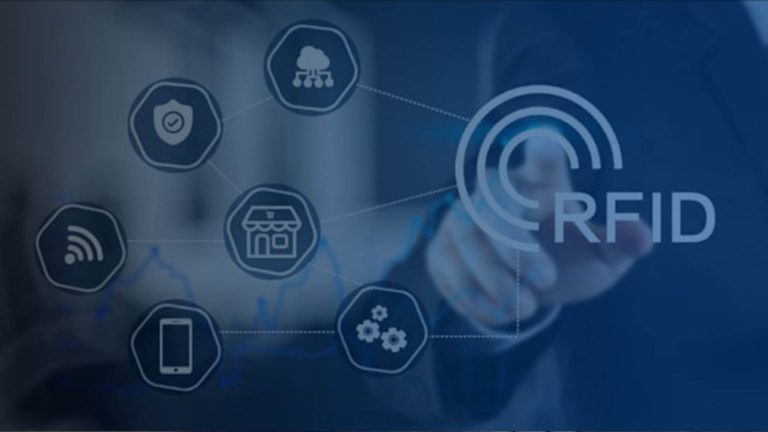
10 ways RFID Technology supports the Supply Chain
RFID technology (Radio-Frequency Identification) can support the supply chain in various ways, improving efficiency, visibility, and product traceability throughout the entire supply chain.
Here are some ways RFID can contribute to improving the Supply Chain:
Here are some ways RFID can contribute to improving the Supply Chain:
- Real-time traceability: RFID enables real-time monitoring of product location and status within the supply chain. This provides greater visibility and allows identification of potential issues or delays before they become serious.
- Automated data collection: RFID simplifies data collection compared to manual methods like barcode scanning. This reduces human errors and speeds up the registration and documentation process.
- Inventory management: RFID can be used for more accurate inventory management. Products with RFID tags can be easily tracked in warehouses, enabling more efficient management and reducing the risk of stockouts or inventory excess.
- Loss reduction: RFID helps prevent losses due to theft or misplacement, as it is possible to constantly monitor the location of items within the supply chain.
- Quality monitoring: RFID can be used to track environmental parameters (e.g., temperature, humidity) along the supply chain, ensuring perishable products are maintained in optimal conditions.
- Authentication and anti-counterfeiting: RFID tags can be used to authenticate products and combat counterfeiting, ensuring products are genuine and compliant.
- Returns management optimization: RFID simplifies returns management, enabling quick identification and registration of returned products, reducing time and resources needed for returns processing.
- Distribution chain improvement: RFID can be used to optimize product transportation and distribution, ensuring delivery in the most efficient way possible.
- Customer experience improvement: Enhanced visibility and traceability enable more accurate information to customers about their order status and location, improving customer satisfaction.
- Regulatory compliance: RFID can help companies comply with regulations and requirements related to product traceability and safety.
Overall, implementing RFID technology in the supply chain can lead to greater operational efficiency, cost reduction, and improved service quality, thus helping to optimize product flow throughout the entire supply chain.
Overall, implementing RFID technology in the supply chain can lead to greater operational efficiency, cost reduction, and improved service quality, thus helping to optimize product flow throughout the entire supply chain.

How RFID and NFC are transforming Smart Factory supply chains
Automation is changing the way factories operate, and RFID enables automation of supply chain functions such as inventory, supplier management, and equipment monitoring.
10 May 2023 Imagine an industrial production environment where inventory, materials, suppliers, and equipment constantly communicate to optimize operational efficiency. This environment becomes reality thanks to the Industrial Internet of Things (IIoT), which integrates IT infrastructure with operational technology to create smart factories. Information derived from inventory levels, operational performance over time, and supplier coordination can significantly improve a factory’s operational efficiency.
There are several ways in which IIoT makes the smart factory possible, including through radio-frequency identification (RFID) and Near Field Communication (NFC) technologies. However, before exploring them, it is worth reviewing the characteristics that differentiate a smart factory from a traditional one.
The advantages of the smart factory
The advantages of the smart factory
IIoT is driving the adoption rate of connected devices in industrial production thanks to its numerous advantages. The first level represents the historical benefits that manufacturers gain by using artificial intelligence (AI) and machine learning (ML) as part of their process:
- Improved inventory control: insights can help companies manage the excess supply/inventory ratio, a significant key performance indicator (KPI) for operations leaders that reduces order management and material handling costs.
- Lower production costs thanks to higher overall equipment effectiveness (OEE): using collected data and artificial intelligence, the smart factory adjusts production flow to maximize uptime, identify patterns, and predict demand changes. This approach also optimizes resources to improve output and energy efficiency.
- Improved quality and reduced scrap: collecting significant amounts of data during production gives operators detailed information on equipment lifecycle. This view enables them to uncover trends in tool wear and predict the next likely failure point, reducing both repair costs and the downtime needed to perform it.
With these three improvements, IIoT can enable decentralization to increase supply resilience without the inefficiencies observed during recent supply shocks. In addition, this approach allows companies to collaborate with new supply partners who can quickly acquire expertise on technology or processes that are new to the manufacturer.
RFID and NFC make the smart factory. How?
RFID creates a unique, serialized identification of connected equipment for error‑proof data transfer. This “fingerprint” can improve inventory management by quickly assessing existing supply and automatically triggering a replenishment order. Inventory managers assign order thresholds and quantities that determine when and how much the ordering software should request.
The unique RFID identification label can also track assets anywhere, alerting procurement and supply chain team members to a problem in shipment. In addition, it can track transit stages and the time between them to help logistics optimize component routing, reducing lead times and potential inventory levels.
Smart factories combine digital information and physical assets to extend production capabilities. The data already exists, so the challenge to optimize benefits is to collect and transmit communication between entities in both directions. The bidirectional flow of information offers a substantial advantage over traditional barcodes or QR codes, creating a critical feedback loop.
NFC, a subset of RFID, does exactly this. It turns the component or subassembly into a communication tool, indicating to operators the current production stage through an active scan. This advantage can reduce the need for mid‑process checks that create inefficiency while helping identify an error through data history. Although they are not passive, NFC tags can provide data from inside a machine with a user “tap and go”. They can communicate data related to pressure, humidity, temperature, vibration, utilization, and condition history.
Another advantage of NFC is that it instantly links the failure location to a machine, thereby alerting the operator to the problem. Assuming the factory has redundant equipment, the software can route subsequent parts to another device to keep production running while the team repairs the broken mechanism.
Data collection enables artificial intelligence to deliver these benefits to the smart factory, and RFID ensures the system uses the data correctly. Proper knowledge and control of environmental conditions and asset health can increase uptime and asset lifespan.
While companies must always overcome challenges when implementing disruptive change in an industry, manufacturing is leaping toward Industry 4.0 thanks to the near‑universal adoption of IIoT. As a result, manufacturers can achieve optimized inventory, lower operating costs, and higher quality through accurate data on the location, condition, or history of a component. RFID and NFC technologies are bringing this information into production, improving supply chain functions and plant operational efficiency.
IIoT is driving the shift toward a standardized, decentralized, and connected supply chain. RFID and NFC enable this rapid progress to create an exciting turning point for industrial production.
Credits: RFID Journal – Adam Kimmel