
The Barcode turns 50 years old
The barcode turned 50 on April 3, 2023. It was April 3, 1973 when the major U.S. consumer goods companies decided to standardize product identification through the GS1 barcode.
GS1 refers to a non-profit global organization that develops and maintains standards for business communication. The most well-known of these standards is the barcode, a graphic symbol printed on products that can be electronically scanned.
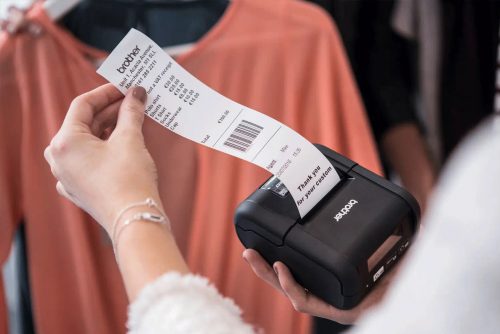
History tells us that the first product with a “GS1 barcode” was scanned at a Marsh supermarket checkout in Troy, Ohio: a pack of Wrigley’s chewing gum costing 61 cents. Today, GS1 barcodes are present on over a billion products: in Italy alone, in supermarket, hypermarket and self-service retail chains, about 350 thousand packaged consumer goods with GS1 barcodes are sold every year (not counting variable weight products and non-food). To get a more concrete idea, products pass through checkouts about 30 billion times generating just under 3 billion receipts every year.
The arrival of the barcode – as GS1 tells us – was revolutionary, so much so that the BBC included it among the "50 things that made the economy global": it changed our shopping habits forever, continues to do so today, connecting a physical product to digital information that travels unimpeded throughout the supply chain
The arrival of the barcode – as GS1 tells us – was revolutionary, so much so that the BBC included it among the "50 things that made the economy global": it changed our shopping habits forever, continues to do so today, connecting a physical product to digital information that travels unimpeded throughout the supply chain
The evolution of the barcode took a major leap forward with the creation of the two-dimensional code that will allow reading a series of multiple information through a web-linked URL. In all sectors, the consumer goods and retail system is on the threshold of the most important transformation since the invention of the barcode. The end of 2027 is the date set by the GS1 board for POS systems installed in stores to be able to read and process both old and new two-dimensional barcodes (QR code or DataMatrix).
The availability of a large amount of information available online and the prevalence of data in developing operational and commercial relationships between businesses have proven to be the driving force behind this revolution: two-dimensional codes can indeed hold a greater amount of data in a smaller space compared to the current linear barcode, such as expiration date, batch or serial number and naturally the GTIN, the product’s unique identifier at the base of the barcode as we know it today. Associating them with a web URL creates a direct link to the producer or retailer’s website that provides access to additional information that is increasingly indispensable today: composition and ingredients, presence of allergens, product origin and processing and production techniques, recipes complete with photos and videos, reviews and ratings from other consumers and much more. The code can be scanned by the consumer also via smartphone (already a common habit). If the same consumer uses a retailer’s app to scan the same barcode, it can be linked to other features, such as ordering products, collecting loyalty points and sharing their experience with friends on social media. 2027 is near and the most equipped global retailers are already implementing product information by updating their fixed and portable scanners to process 2D codes. The improvement work will not stop and the potential of two-dimensional codes will certainly open doors to new and perhaps still unknown business solutions for companies in all sectors.

Linerless labels: a green breakthrough in labeling waste management
Optimizing the use of raw materials is a primary objective in all production sectors. The use of linerless labels, i.e., without the siliconized backing, is a key sustainability factor in reducing raw material waste in packaging. Therefore, to impact increasingly eco-sustainable carts, it is important not to underestimate the importance of green labeling of products, also considering that the label is a true communication tool with the consumer, strategically decisive in the choice processes leading to purchase. This happens precisely because of its informative qualities, but not only. In fact, the labels themselves can carry sustainability in their own design and composition.
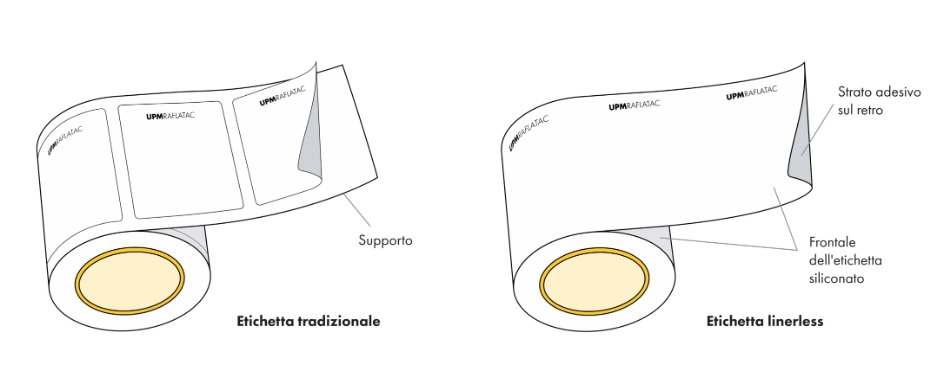
An example of this front labeling contribution is offered by so-called linerless labels. This term refers to a type of adhesive label characterized by the absence of liner, i.e., without the siliconized backing that carries traditional labels before being applied to products. We recall that traditional liner-based labels are organized in rolls where the adhesive part of the label comes into contact with the “liner” and, once the labels are dispensed, it becomes waste material. In practice, linerless labels, by eliminating the waste deriving from the backing, significantly reduce carbon dioxide emissions to produce it. Only a portion of siliconized liner supports is recycled, the remaining part when disposed contributes to CO2 production, which costs both the environment and the company that must dispose of the waste material. It is estimated that over 600,000 tons of siliconized waste end up in landfills (source: Fortune Business Insight). Moreover, with this innovation, each roll contains about 30/40% more labels, ensuring convenience also in terms of productivity, flexibility, transportation and storage, with the consequent advantage of reducing the company’s carbon emissions. Without the liner, in addition to practical issues such as increased productivity and reduced downtime, there is also great customization potential for the labels themselves, opening up a great front also for targeted green marketing. According to a Fortune Business Insights report, it is expected that the global linerless labels market will reach 3.4 billion dollars by 2027, 5% more than in 2019. The absence of siliconized paper to dispose of means that linerless solutions represent a true step forward toward more sustainable labeling. The use of linerless labels can also help companies reduce fines. Eliminating waste improves safety and helps comply with OSHA (Occupational Safety and Health Administration) standards by reducing waste material that remains on warehouse floors and work areas during production.
We discuss this top topic with Dario Santilli, Packaging Solutions Manager at UPM Raflatac, a Finnish multinational world leader in the production of self-adhesive materials that has recently installed a new linerless production line in Poland.
We discuss this top topic with Dario Santilli, Packaging Solutions Manager at UPM Raflatac, a Finnish multinational world leader in the production of self-adhesive materials that has recently installed a new linerless production line in Poland.
“Linerless labels for direct thermal printing are a sustainable option compared to conventional self-adhesive materials for labels. Since there is no backing, issues related to label waste management are eliminated; moreover, linerless labels can be cut to any length optimizing costs, increasing flexibility and drastically reducing SKUs in stock.
At UPM RAFLATAC we have also developed OPTICUT™ adhesive technology for food, retail, logistics and quick service restaurant applications. Often with traditional adhesives, linerless labels, to achieve good adhesion, release glue residues due to cutting generating adhesive buildup. This causes paper jams and frequent printer maintenance interventions.
The revolutionary chemical composition of the OPTICUT™ adhesive range sets a new benchmark for the linerless labels industry. In short, OptiCut offers clean cuts, excellent adhesion and sharp print quality, drastically reducing maintenance interventions on cutting units.
All this without neglecting the sustainability aspect which for UPM Raflatac has been a distinctive feature for decades, in fact our entire Linerless range is Carbon Neutral and FSC® certified (FSC C012530). The origin of raw materials from sustainably managed forests protects wildlife, contributes to mitigating climate change and promotes biodiversity.”
Digitalization of labeling processes: how to implement an integrated traceability system
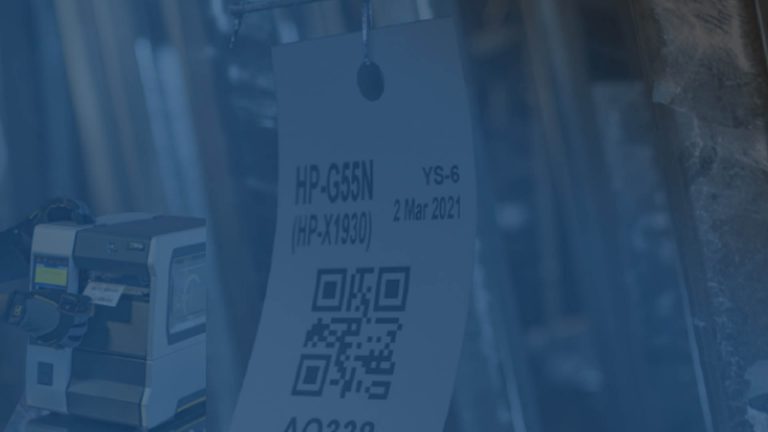
Good management of company operational processes is achieved by facilitating and speeding up activities. In most cases, this means ‘automating’ production phases with consequent cost reduction, shorter commercial times, and increased organizational efficiency. Automation enables optimizing complex printing processes, eliminating errors, and improving printing productivity. It is possible to integrate printing with existing company systems and hardware devices. This is why every company should adopt a product identification system through an efficient labeling system. Products need labels!
In the automotive sector or mechanical sectors, labeling ensures component traceability down to the smallest screw. In logistics, it guarantees delivery punctuality. In electrical appliances, labels indicate operating characteristics and usage. In the pharmaceutical industry, labeling prevents health-relevant errors, in chemistry it illustrates risks related to product handling with multicolored labels and without language barriers. On food, labeling provides information on composition, while on textiles it contains optimal care instructions.
The label is perceived as a growth area, but mainly in a digital perspective, a sort of all-in-one choice to compensate for lack of know-how. This, however, is a very reductive vision, because multiple skills must be involved in label production and it is extremely important to adapt production capacity to customer requirements. Materials, field of application, industrial process, stock management are just some of the elements that printers entering this sector must consider, remembering above all that the label is the mandatory and functional complement of the product for sale. Think of the importance of the label as an anti-counterfeiting system for the product. Counterfeiting impacts 5-7% of world trade, generating significant problems for original producers.
Therefore, a series of security features are continuously introduced on product labels and packaging to reduce counterfeiting effects, such as adhesives that make labels harder to remove. Requirements are higher the more niche or high-value products are involved, often related to the food sector. This issue is one of the most sensitive and Made in Italy products perceive it particularly. From these areas, therefore, come the greatest requests: web interactivity, physical identifications, immediate traceability are just some of the instances that are requested to be accessible through labeling.
Modern labeling management software allows complete autonomy in customizing the information to be recorded. Companies must be able to significantly reduce manual printing operations and reach new levels of precision and control thanks to on-demand printing features that allow company users to create customized printing applications, simplifying complex processes, eliminating errors, and facilitating the labeling system.
Mauro Chiaraluce, Business Development Manager at Horsa explains how to implement an integrated digital traceability system starting from industrial labeling with the support of the most advanced AIDC technologies:
Mauro Chiaraluce, Business Development Manager at Horsa explains how to implement an integrated digital traceability system starting from industrial labeling with the support of the most advanced AIDC technologies:
“Traceability of raw materials, semi-finished and finished products throughout the supply chain – from inside the plant, to exit and return from third parties, up to customers themselves – starts with a correct labeling process and requires the integration of different technologies and skills that take into account the type of raw materials, various production processes, and working conditions of the specific sector and company.
LMS (Label Management System), industrial thermal printers, specific labels for the surface they must be applied to, for the production process and for the environmental conditions they must withstand and resist: these are the elements to consider in implementing an advanced industrial labeling system.
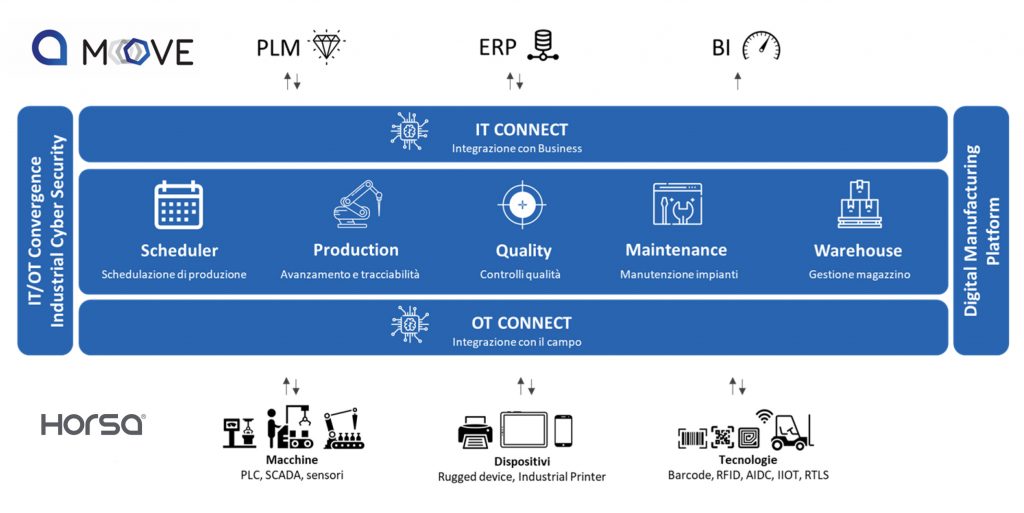
At Horsa we use an end-to-end approach for industrial traceability projects, thanks to MOVE the integrated Digital Manufacturing platform companies have the possibility to monitor step by step the production process, starting from raw material receipt and arriving at finished product delivery.
Supply Chain processes are internalized with the aim of simplifying production, making it leaner and having immediate information on any errors or changes to be made.”

Re-Labeling: how to best manage variable data printing
In various sectors from Retail to Manufacturing through Logistics, re-labeling of products or packaging is a process that requires long times and is often subject to errors or inaccuracies.
In the Retail sector, re-labeling products in the presence of sales and special offers is still often done today with manual operations that require a “forced” passage through the management system to modify the variable data of each product and re-apply the updated label.
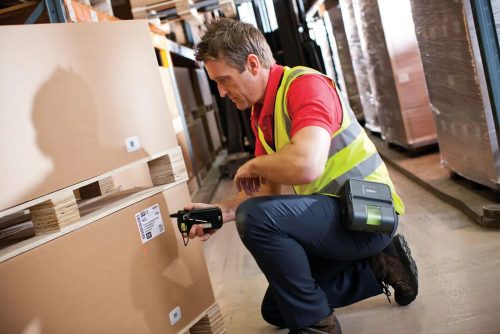
In the Manufacturing and Logistics sectors, the need to re-label products is linked to the arrival of goods that are naturally labeled with the supplier code and need to be re-adapted to plant processes with the assignment of internally readable codes. Procedures that keep operators busy causing inefficiencies and a consequent increase in costs.
Letizia May, SPS Business Developer at Brother Italia explains how it is now possible to speed up and optimize re-labeling processes:
Letizia May, SPS Business Developer at Brother Italia explains how it is now possible to speed up and optimize re-labeling processes:
“By pairing a barcode reader with our RJ series portable printers, it is possible to reprint labels near the product, optimizing the process in terms of time and errors. Brother’s RJ portable printers can store both label layouts and a database in Excel or CSV format, which must report the product code and the variable data to be shown on the label associated with that product code. In this way, the operator simply needs to scan the barcode of the product to be re-labeled and the printer will automatically match the read code with the code in the stored database, printing the label that will show the variable data. This process is really very simple also because it is not tied to the customer’s management system: just create an Excel or CSV file and transfer it to the printer via a Brother App”