
When we talk about ‘water crisis’ we refer to a topic with worldwide relevance. In a small country like Italy, water is a fundamental resource for the operation of 1.5 million agricultural companies, about 330,000 water-intensive manufacturing companies and over 9,000 energy sector companies.
Italian water infrastructure is insufficient and inefficient, considering that 60% of the network is over 30 years old, 25% over half a century. The percentage of water losses in the distribution phase reaches 41.2% placing our country in the fourth-to-last position among the 27 EU+UK countries while that relating to linear losses – equal to 9,072 m3/km/year – positions us last in Europe.
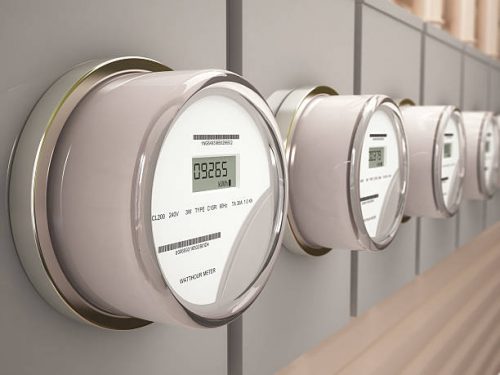
All this is accompanied by the low digitalization of water flow measurement systems, since 50% of meters in Italian homes are over 20 years old. Smart meters or intelligent meters which, beyond the convenience of use for monitoring and billing, would allow saving, just in the residential sector, about 2.4 billion euros equivalent to 513.3 million m3 (about 10% of annual civil water consumption), represent only 4% of total meters, 12 times less than the European average where almost one in two (49%) is already “smart”.
The urgency to find a solution to the water emergency is evident from the worsening caused by drought. In Italy it no longer rains enough to fill the basins and infrastructure capable of countering the consequences of the climate crisis is lacking. It no longer rains in the North, the hydrological balance is now compromised and rebalancing cannot do without important external interventions. Want to take a look at some numerical data? The great Northern lakes are all below average and their filling percentage is, today, lower than that of January 2022 – Lake Maggiore 18%; Lake Iseo 20.7%; Lake Como 23.5%; Lake Garda 36.4% – followed by an extraordinary drought season and one of the hottest summers: +1.37°C in the North and +1.13°C in the South.
To counter drought, a water prevention policy must be pursued that counters waste, dispersion and optimizes consumption, as demonstrated by some advanced experiences in our country that have long been implementing virtuous systems for water collection and recovery. They represent examples of high technical-scientific profile to be replicated, where possible, throughout the national territory. (source Greenplanner)
There are no simple solutions to solve the water crisis since action must be taken at the origin of the climate crisis: it is a complex emergency situation, since the causes are multiple and interconnected. However, it is possible to implement some interventions to at least mitigate the problem, such as:
- build structures that ensure the availability and supply of water resources
- use low-water consumption irrigation systems in agriculture
- regularly maintain water distribution networks
- recover and purify rainwater
- raise citizen awareness for rational water use
- incentivize the use of systems for monitoring and consequent reduction of water consumption in homes and companies
Andrea Sesana, CEO of Lektor, a company highly specialized in software solutions in the field of meter reading detection and today remote reading, explains how it is possible to intervene to improve the current emergency situation.
Andrea Sesana, CEO of Lektor, a company highly specialized in software solutions in the field of meter reading detection and today remote reading, explains how it is possible to intervene to improve the current emergency situation.
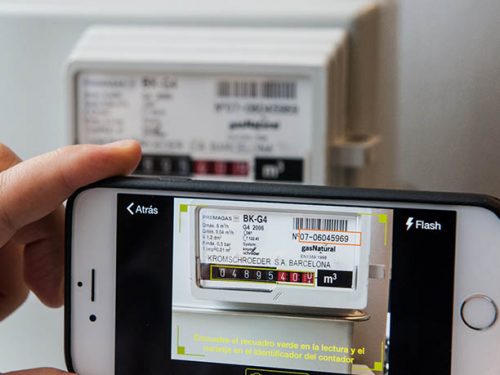
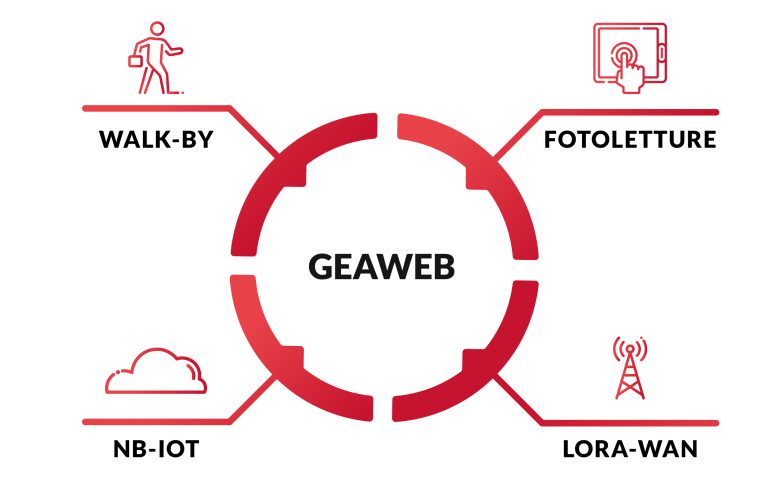
“Regarding the sector that has involved me for 23 years, I can certainly state that currently available technology can be of enormous advantage to optimize water resource use. Finally, technological evolution and the PNRR push have led to an achievable goal: the water balance, which has as one of its fundamentals, the identification of the quantities of water introduced into the network and that consumed by users/companies. Until a couple of years ago it was not possible to have precise evidence of this gap as neither consumption nor the quantity introduced into the network was available precisely; consumption was/is settled through manual readings two or three times a year. Today smart meters and Lorawan and NbIOT technology enable having data immediacy with daily and even hourly frequency. By dividing the served area into districts it will therefore be possible to verify, against the general consumption of users in that area and the quantity introduced, if there is such a difference as to consider that there may be a loss in that zone. We are facing a historic innovation for the water sector, which sees us today protagonists together with Unidata Spa and Bip Spa in the digitalization of the entire territorial area managed by AMAP of Palermo which has bet on Lorawan technology for Automatic Meter Management. I am certain that the experience we will gain in this ambitious project can be made available to other realities in the Italian territory.”